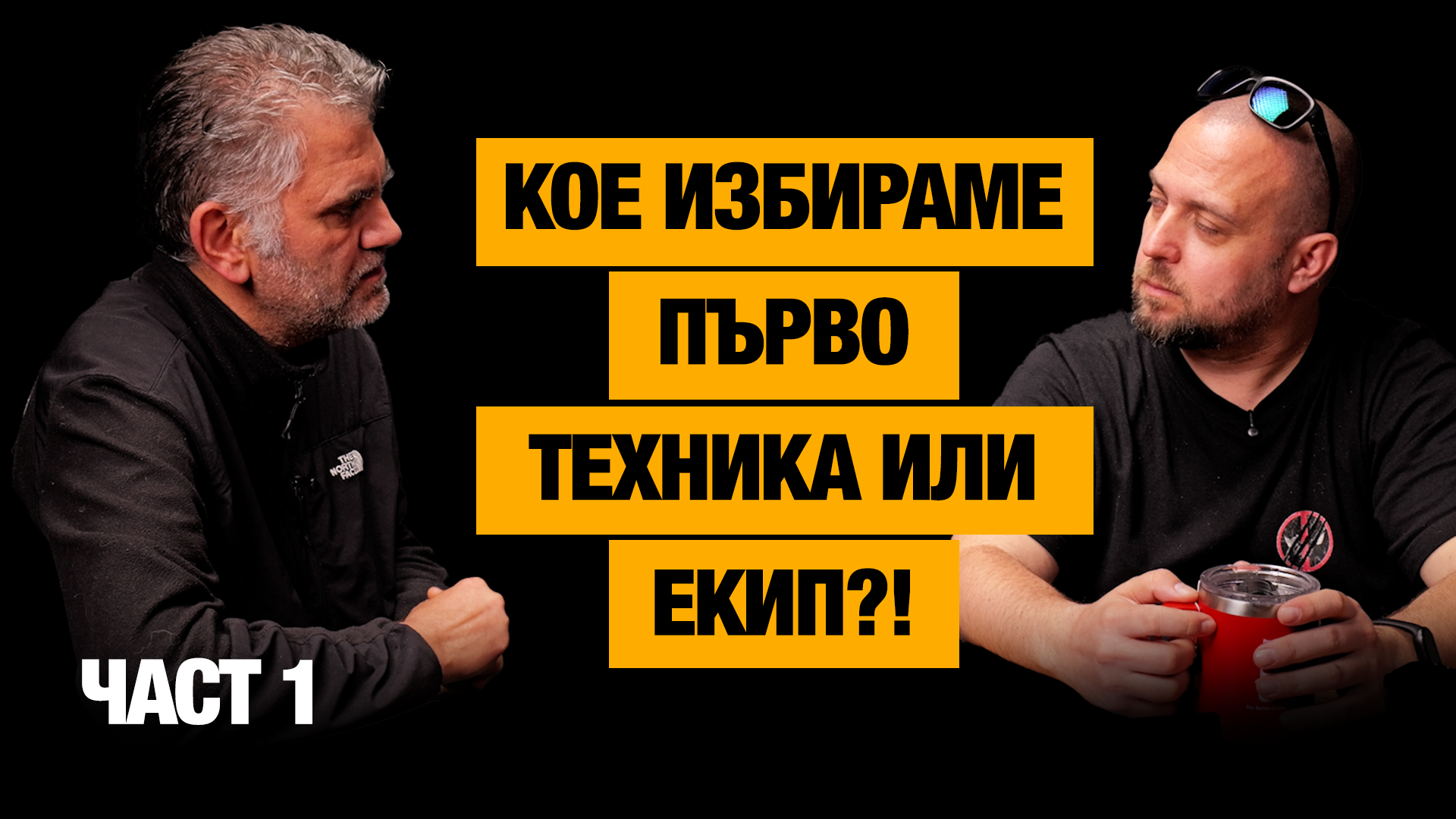
Hristo Lazarov: The "Alphabet" of Visual Storytelling is the Foundation; Everything Else Follows
In the latest episode of "Talking About Filming," Tsvetan meets with Hristo Lazarov - a cinematographer with over 30 years of experience whose professional journey spans from reportage photography to documentary cinema and large-scale commercial productions. Their conversation isn't just about camera settings; it’s about the fundamental logic that gives a frame its meaning.
1. The Foundation: Why Information Isn't Always Knowledge
Today, everyone has access to thousands of tutorials, but Hristo points out a significant challenge: the lack of structure.
"There is a huge amount of chaos in the minds of young creators. They know many things, but they often lack a hierarchy of knowledge."
For him, filming is like writing - you can't truly tell a story if you haven't mastered the alphabet. This "alphabet" is the understanding of physics, optics, and how light behaves before you even touch a camera.
2. Gear as a Consequence, Not a Starting Point
It’s common to hear that professional work requires an enormous budget. Hristo offers a different perspective: today’s technology is so advanced that even modest gear can yield professional results if used correctly.
- Tools with Purpose: Every piece of equipment, like a matte box or a specific filter, should serve a logical function. If it’s there just to "look pro," it’s not serving the story.
- Meaning Over Models: Choosing gear should be the result of a specific need. First, you decide what message you want to convey, and then you select the tools that help you say it.
3. Learning to "Read" the Visuals
One of the most insightful parts of the conversation is how experience changes the way we see the world.
- Analysis as Second Nature: Hristo shares that when he watches a film, he doesn't just follow the plot; he "reads" the frame like a book - identifying where the light comes from, why the contrast is set that way, and why a specific lens was chosen.
- Training the Eye: This isn't just a talent; it’s a skill developed by consciously observing quality cinema and analyzing light patterns in everyday life.
4. Professionalism Through Responsibility
For Hristo, the line between a hobby and a profession is defined by responsibility toward the final result. A professional is someone who can deliver a quality product under any circumstances because they understand the underlying processes and don't rely solely on luck or camera automation.
Conclusion: Starting the Journey Right
Hristo Lazarov’s insight is simple yet profound in a world of instant results: Focus on the principles, and the gear will start to make sense. When you understand how light works, every camera in your hands becomes a powerful tool for expression.